What we built
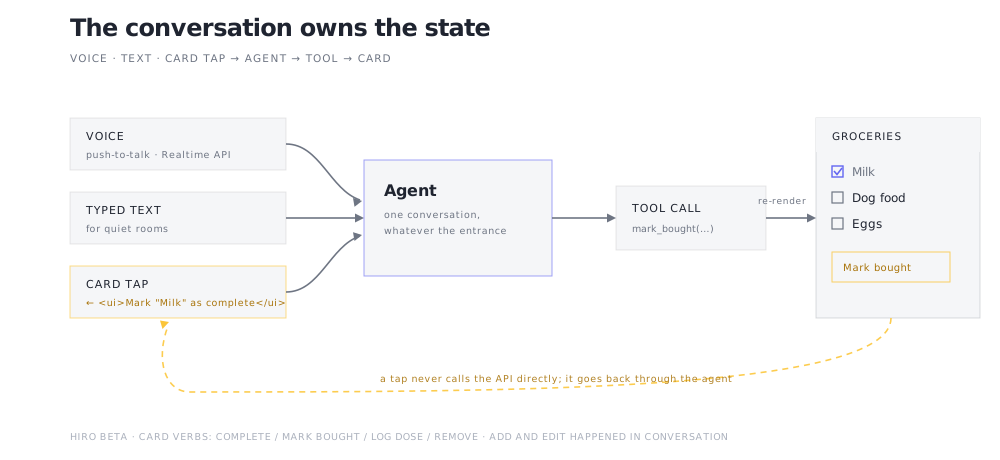
The scenario the whole product was designed around was small: you're walking the dog, you remember you're out of dog food, and you say "add dog food to the grocery list" without breaking stride. No app opened, no menus. By Saturday's market trip the list is complete because you built it in passing, one spoken item at a time.
Hiro was our attempt to ship that as a consumer product. It lived at hiro.aihero.studio (the domain is retired now), and the beta shipped four agents, each with a bounded scope and a small set of operational tools. The grocery agent added items, marked them bought, and organized the list by store section. The todos agent captured tasks with due dates, priorities, and completion. The weather agent answered the practical morning question of long trail or short loop. The intentions agent tracked goals and the daily habits behind them, with a weekly view of what was done and what remained.
Two structural decisions sat under the agents. Realms were isolation boundaries: a personal realm, a shared family realm, a professional realm, each with its own agents and its own data, and no way for one to read another. A family member could work the same grocery list; your journal stayed yours. Sign-in was passwordless from day one, an email OTP with a six-digit code, so there was no password to reuse or breach.
The design stance was the part visitors noticed first. The interface was monochrome, with no animations, no streaks, no badges, and no notifications asking you to come back. We were explicit that the product should not compete for its user's attention. That stance turned out to be the most transferable thing we built, for reasons the persona section below explains.